
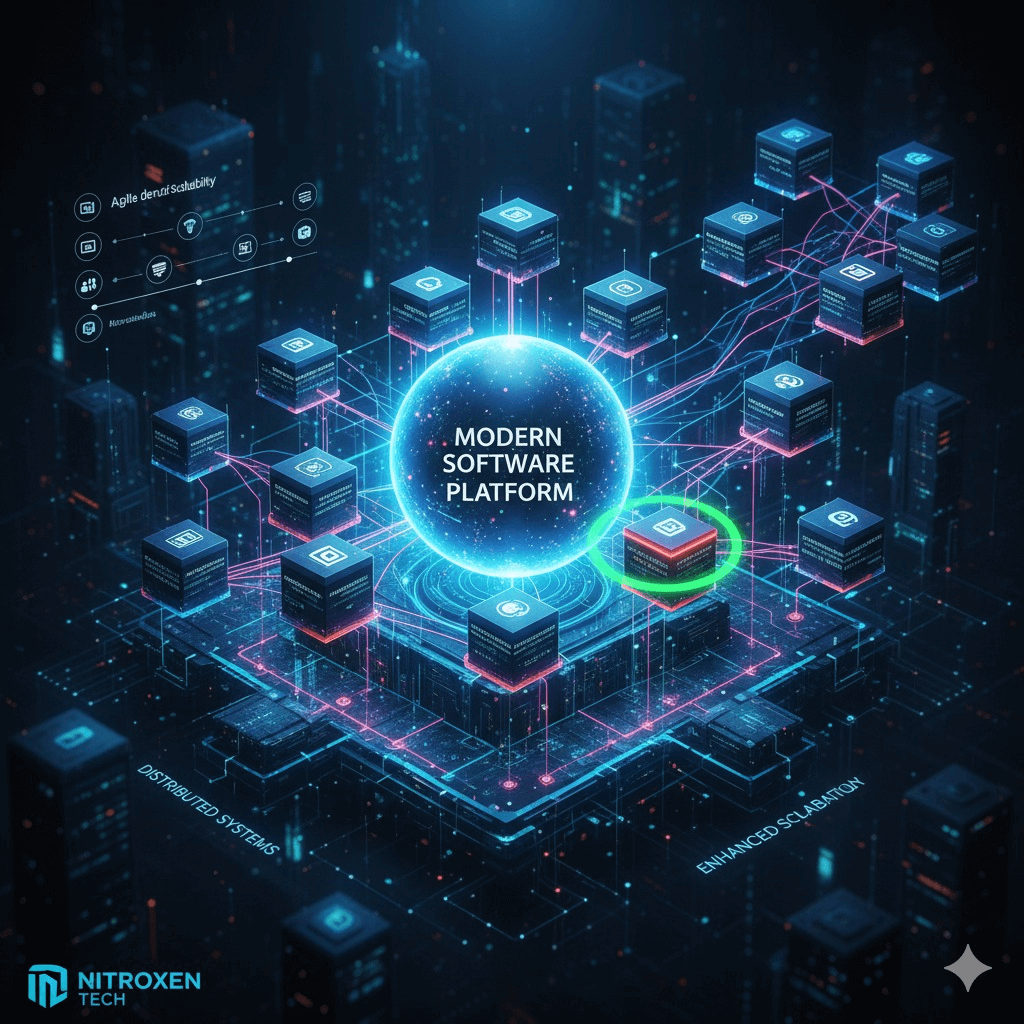
Why Microservices Architecture is the Foundation of Modern, Resilient Software
In today's fast-paced digital world, businesses demand software that is not only powerful but also adaptable, scalable, and incredibly reliable. Traditional "monolithic" software often struggles to meet these demands, leading to slow development cycles and difficult updates. Enter Microservices Architecture: a revolutionary approach to building applications as a collection of small, independent services. This paradigm shift is rapidly becoming the gold standard, offering unmatched resilience, agility, and efficiency that defines modern software development.
Key Benefits of Microservices:
1. Improved Resilience
A failure in one service does not bring down the entire application, ensuring greater stability and continuous operation.
2. Enhanced Scalability
You can scale individual services that are under heavy load without having to replicate the entire application, which is highly efficient.
3. Faster Development
Independent teams can work on different services simultaneously, accelerating development cycles and feature deployment.
4. Technology Flexibility
Each service can be built using the best programming language or framework for the job, without being tied to a single technology stack.
5. Easier Maintenance
Small, independent services are easier to understand, test, and maintain compared to a large, complex monolithic codebase.
6. Continuous Deployment
Updates to a single service can be deployed independently, allowing for more frequent and safer releases.